
Thejavasea.me leaks aio-tlp370 has rapidly gained traction across the United States, especially among cybersecurity professionals, developers, and digital privacy advocates. This surge is largely due to increased awareness of data breaches, leaked toolkits, and underground digital ecosystems.
At its core, this topic revolves around a large-scale leak involving an “AIO (All-In-One)” data package labeled TLP370, reportedly distributed through leak-sharing platforms like TheJavaSea. These leaks often contain source code, credentials, scripts, and sensitive internal system data, making them a serious cybersecurity concern.
Table of Contents
What Is Thejavasea.me Leaks AIO-TLP370? (Visual Explanation)
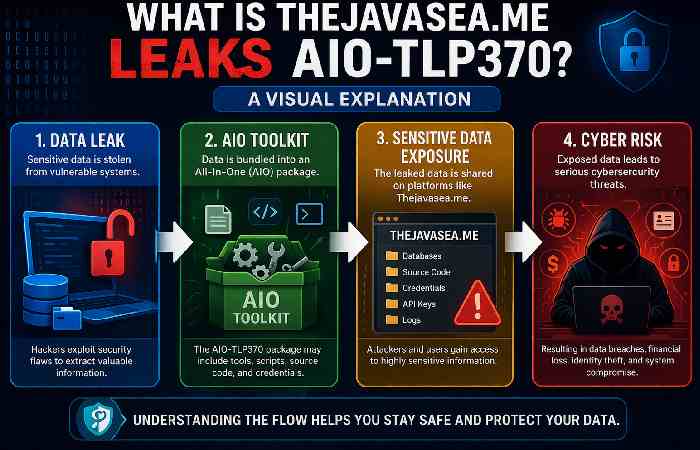
What Is Thejavasea.me?
Thejavasea.me is widely described as a leak-sharing or data distribution platform that hosts various types of digital content, including:
- Leaked databases
- Tools and scripts
- User-generated uploads
- Forums discussing hacking, cybersecurity, and software
Such platforms often operate in gray or illegal areas, distributing sensitive information without authorization.
What Does “AIO-TLP370” Mean?
Understanding the thejavasea.me leaks aio-tlp370 is crucial for SEO and user clarity.
Breakdown of the Term
| Component | Meaning | Explanation |
| AIO | All-In-One | Bundled toolkit or dataset |
| TLP | Identifier | Version or classification tag |
| 370 | Version Number | Specific release of the dataset |
- AIO packages typically include multiple tools, scripts, or data sets combined into one bundle
- TLP370 represents a specific dataset version or release within the leak ecosystem
What Is the AIO-TLP370 Leak?
The AIO-TLP370 leak refers to a large archive of sensitive digital information exposed online, reportedly around 1.2GB in size.
Contents of the Leak
| Data Type | Description | Risk Level |
| Source Code | Internal application logic | High |
| API Keys | Authentication tokens | Critical |
| Passwords | User credentials | Critical |
| Configuration Files | System settings | High |
| Logs | Operational activity records | Medium |
This type of leak provides a “blueprint” of systems, enabling attackers to exploit vulnerabilities more effectively.
How AIO Leak Ecosystems Work
AIO (All-In-One) leak ecosystems operate through a network of contributors, aggregators, and distribution platforms. These systems are designed to collect, bundle, and redistribute large datasets in a single package.
How It Works
| Stage | Description |
| Data Collection | Hackers gather breached data |
| Aggregation | Data is combined into AIO packages |
| Packaging | Files organized and labeled (like TLP370) |
| Distribution | Shared on leak sites/forums |
| Exploitation | Used by attackers or researchers |
Key Characteristics
- Decentralized distribution
- Anonymous contributors
- Frequent repackaging
- Rapid spreading across forums
How Did the Leak Happen?
Common Causes of Data Leaks (USA Context)
| Cause | Explanation | Frequency |
| Weak Security Systems | Poor encryption or outdated software | High |
| Insider Threats | Employees leaking data | Medium |
| Misconfigured Servers | Public access enabled accidentally | High |
| Phishing Attacks | Credential theft via scams | High |
| Third-party Breaches | Vendor vulnerabilities | Medium |
According to cybersecurity patterns, misconfiguration and credential exposure are among the most common reasons for such leaks.
How Data Leaks Like AIO-TLP370 Happen (Flow Diagram)
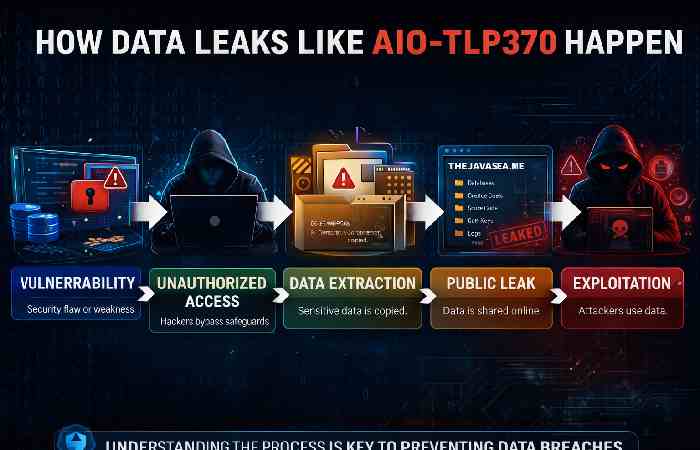
Impact of Thejavasea.me Leaks AIO-TLP370 in the USA
The United States is one of the most affected regions due to:
- High digital adoption
- Enterprise reliance on cloud systems
- Large developer ecosystems
Key Impacts
- Cybersecurity Threats
- Hackers gain access to internal systems
- Easier exploitation of vulnerabilities
- Identity Theft Risks
- Personal data can be misused
- Financial fraud increases
- Business Losses
- Revenue loss due to breaches
- Legal penalties and compliance issues
- Trust Damage
- Users lose confidence in platforms
How Businesses in the USA Are Affected
US businesses are highly vulnerable due to their digital infrastructure and cloud dependency.
Industry Impact Table
| Industry | Impact Level | Reason |
| Technology | High | Source code exposure |
| Finance | Critical | Financial data leaks |
| Healthcare | Critical | Patient records |
| Retail | High | Customer data |
Business Consequences
- Financial loss
- Regulatory fines
- Reputation damage
- Customer churn
Statistical Overview (USA Cybersecurity Context)
| Metric | Value |
| Average cost of data breach (USA) | $9+ million |
| Most common breach cause | Stolen credentials |
| Industries affected | Tech, Finance, Healthcare |
| Increase in leaks (2024–2026) | Significant growth |
Types of Data Found in AIO Leak Packages
Common Components
| Category | Examples | Usage |
| Developer Tools | Scripts, automation tools | Coding & hacking |
| Credentials | Emails, passwords | Unauthorized access |
| Databases | User records | Data mining |
| Logs | System logs | Attack planning |
| APIs | Tokens, keys | System control |
Resource Link: National Institute of Standards and Technology (NIST) Cybersecurity Framework
https://www.nist.gov/cyberframework
Why Thejavasea.me leaks aio-tlp370 Is Trending in the USA
Key Reasons
- Rising cyberattacks
- Increased curiosity about leaks
- Developer and hacker community discussions
- SEO-driven content demand
Risks of Accessing Leak Sites
- Major Risks
- Malware infections
- Phishing attacks
- Legal consequences
- Data theft
Risk Comparison
| Risk Type | Severity | Likelihood |
| Malware | High | High |
| Identity Theft | Critical | Medium |
| Legal Issues | High | Medium |
| Data Loss | High | High |
Role of Cybercriminal Communities in Leak Distribution
Online communities play a major role in spreading and amplifying leak datasets.
- Private forums
- Encrypted messaging apps
- Dark web marketplaces
Community Behavior
| Activity | Purpose |
| Sharing leaks | Gain reputation |
| Selling data | Financial profit |
| Reviewing leaks | Validate authenticity |
| Repackaging | Increase reach |
Legal Implications in the USA
Accessing or distributing leaked data can violate:
- Computer Fraud and Abuse Act (CFAA)
- Data protection laws
- Intellectual property laws
How to Stay Safe from Data Leaks (Cyber Hygiene Visual Guide)
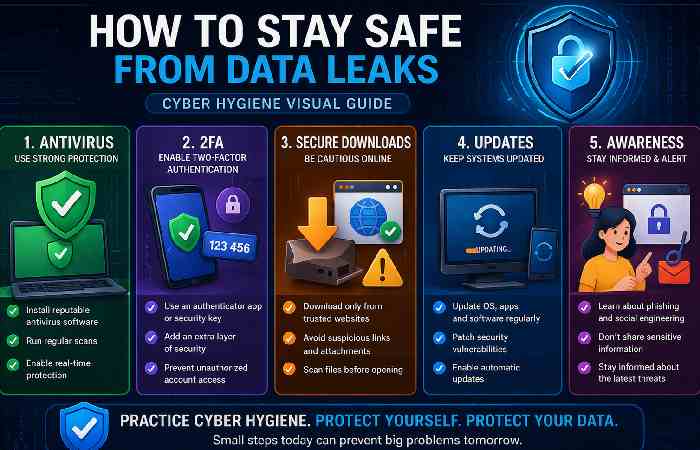
How to Stay Safe
- For Individuals
- Use strong passwords
- Enable 2FA
- Avoid unknown downloads
- Use antivirus software
- For Businesses
- Implement zero-trust security
- Regular audits
- Employee training
- Data encryption
Thejavasea me leaks aio tlp370 Review (USA Perspective)
Thejavasea me leaks aio tlp370 review is increasingly searched in the United States as users try to understand whether this leak is real, useful, or dangerous.
Overview of AIO-TLP370 Leak
| Factor | Analysis |
| Authenticity | Unverified / mixed reports |
| Content Type | Bundled tools, credentials, scripts |
| Risk Level | Extremely High |
| Usefulness | Limited (mainly for attackers/researchers) |
| Legality | Potentially illegal |
Key Insights from Review Analysis
- Most cybersecurity experts consider it unsafe and unreliable
- Many leak packages are repackaged or fake
- Some may contain malware disguised as tools
- Real value is mostly for security research, not general users
Pros and Cons Table
| Pros | Cons |
| May contain useful datasets for research | High malware risk |
| Helps cybersecurity analysis | Legal consequences |
| Insight into vulnerabilities | Ethical concerns |
| Rare or exclusive content | Often fake or outdated |
Expert Verdict (USA Cybersecurity View)
- Not recommended for general users
- Only for controlled cybersecurity environments
- High-risk exposure to malware and data theft
Difference Between Real and Fake Leak Packages
Not all leak packages are genuine. Many are fake, outdated, or intentionally malicious.
Comparison Table
| Feature | Real Leak | Fake Leak |
| Data Quality | Structured and usable | Random or junk data |
| File Size | Consistent with claims | Often misleading |
| Malware Risk | Medium | Very High |
| Source Credibility | Known forums | Unknown sources |
How to Identify Fake Leaks
- Suspicious file sizes
- No verifiable source
- Too-good-to-be-true claims
- Requires suspicious downloads
Thejavasea me leaks aio tlp370 Download: Risks, Reality & Legal Warning
Thejavasea me leaks aio tlp370 download is gaining attention in the USA as users look for access to leaked AIO data packages. However, these files often come with serious risks, including malware, data theft, and legal issues.
AIO-TLP370 is believed to contain sensitive data like credentials, source code, and APIs, making it highly dangerous to download from unverified sources. In reality, most such downloads are unsafe and potentially illegal, putting users at risk of cybersecurity threats and legal consequences.
- This section explains the risks, reality, and legal warnings to help users stay informed and protected.
- There is no verified safe or legal source to download AIO-TLP370.
Why Users Search for Download
| Reason | Explanation |
| Curiosity | Want to see contents |
| Free tools | Access premium software |
| Data mining | Looking for leaked credentials |
| Research | Cybersecurity analysis |
Risks of Downloading AIO-TLP370
| Risk Type | Description | Severity |
| Malware | Trojans, ransomware embedded | Critical |
| Phishing | Fake download pages | High |
| Legal Issues | Violates US cyber laws | High |
| Data Theft | Personal info stolen | Critical |
Many leak files are intentionally infected to target users
Legal Status in the USA
Downloading such files may violate:
- Computer Fraud and Abuse Act (CFAA)
- Data privacy laws
- Intellectual property laws
Safe Alternatives Instead of Downloading
- Use ethical cybersecurity labs
- Practice on legal platforms (CTF tools)
- Learn via authorized datasets
Prevention Strategies for Future Leaks
Organizational Measures
| Strategy | Benefit |
| Encryption | Protects data |
| Monitoring | Detects threats early |
| Access Control | Limits exposure |
| Backup Systems | Prevents loss |
Lessons Learned from AIO-TLP370 Leak
- Security is not optional
- Data exposure affects everyone
- Leak ecosystems are growing
- Prevention is better than response
Frequently Asked Questions (FAQ)
Is AIO-TLP370 legal?
- No, accessing leaked data may violate laws.
Is thejavasea.me safe?
- No, such sites often carry risks like malware.
What should I do if my data is leaked?
- Change passwords
- Monitor accounts
- Enable 2FA
Conclusion
The thejavasea.me leaks aio-tlp370 topic represents a growing concern in the United States cybersecurity landscape. It highlights how data leaks, AIO toolkits, and underground platforms can create widespread risks for individuals and organizations alike.
Understanding this topic is essential not just for SEO or curiosity—but for digital safety, awareness, and prevention in an increasingly connected world.